Crawl Space Dehumidifier Guide: When You Need One and How to Size It
If your crawl space smells musty, your floors feel cold or springy, or you keep finding mold on the joists, the humidity down there is almost certainly too high. A crawl space dehumidifier is one of the most effective tools for fixing that, but only when it is sized, placed and drained correctly. This guide walks through when you actually need one, how to pick the right capacity, what it costs to buy, install and run, and how a dehumidifier compares to ventilation and full encapsulation.
Why and when you need a crawl space dehumidifier
Wood starts to grow mold and attract pests when the surrounding air stays damp, and the sweet spot you are aiming for is a relative humidity below 55 to 60 percent. In much of the U.S., outdoor summer air is far wetter than that, so a crawl space that breathes outdoor air will stay damp no matter what you do. The clearest signs you need help controlling moisture include:
- A musty or earthy smell that drifts up into the living space.
- Visible mold or white efflorescence on joists, subfloor or foundation walls.
- Condensation or standing water on the vapor barrier, pipes or ductwork.
- Cupping, buckling or soft hardwood floors above the crawl space.
- A humidity reading above 60 percent on an inexpensive hygrometer left down there for a day or two.
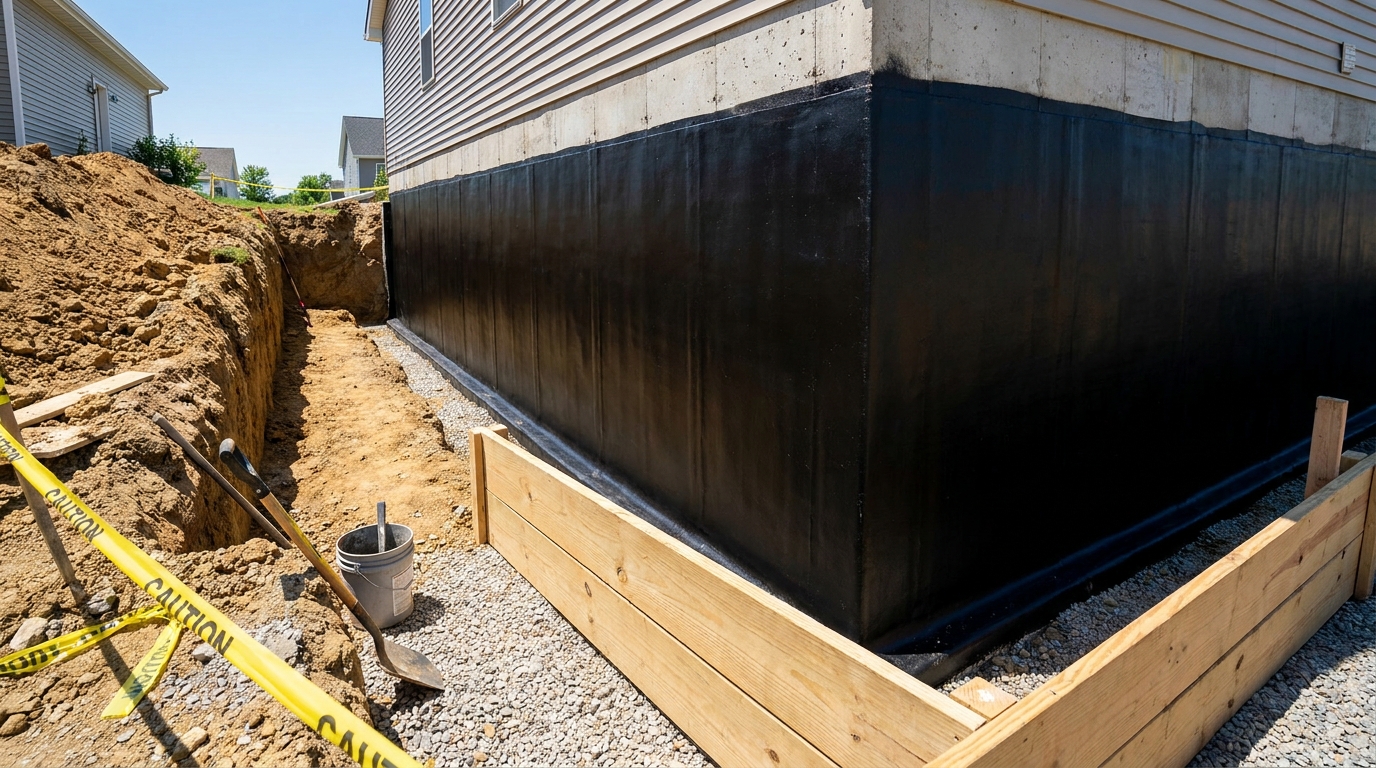
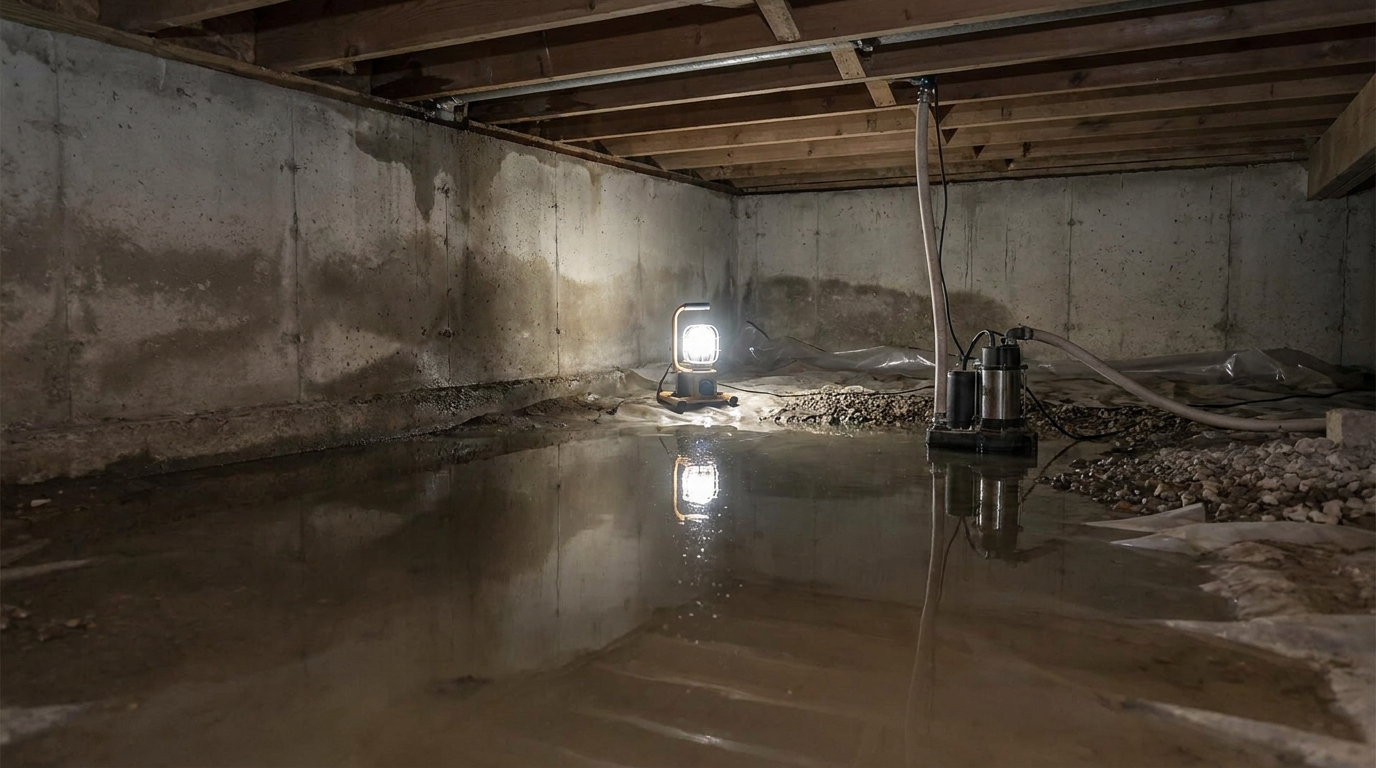
A dehumidifier is the right tool when the problem is airborne moisture and high humidity. It is not a fix for an active plumbing leak, groundwater flooding or a grading problem that sends rainwater under the house. Those need to be corrected first, because no dehumidifier can keep up with liquid water. The timing matters too. Humidity problems are usually worst in late spring and summer, when warm, moist outdoor air meets the cooler surfaces of a below-grade space, so the easiest way to confirm you have an airborne moisture problem is to leave a hygrometer down there through a warm, humid week and watch the readings.
How to size a crawl space dehumidifier
Dehumidifiers are rated in pints of water removed per day. Sizing depends mainly on the square footage of the crawl space and how damp it is to begin with. The table below gives typical starting points for a sealed or encapsulated crawl space. If the space is very wet, has a dirt floor, or is in a humid climate, size up to the next tier.
| Crawl space size | Moderately damp | Very wet |
|---|---|---|
| Up to 1,000 sq ft | 50 to 70 pints/day | 70 pints/day |
| 1,000 to 1,500 sq ft | 70 pints/day | 70 to 90 pints/day |
| 1,500 to 2,500 sq ft | 70 to 90 pints/day | 90 to 120 pints/day |
| 2,500 sq ft and up | 90 pints/day | 120 pints/day or two units |
Two practical notes. First, buy a unit built for crawl spaces rather than a portable room dehumidifier, because crawl space models are designed for the low, cool, dusty environment and usually include a built-in pump and a condensate hose. Second, a sealed space needs far less capacity than a vented one, which is a big reason encapsulation and a right-sized dehumidifier work so well together.
Cost to buy and install
These are typical U.S. ranges and are estimates only, since prices vary by region, brand and the condition of your crawl space.
- The unit itself: roughly $800 to $2,000 for a dedicated crawl space dehumidifier. Larger-capacity and higher-efficiency models sit at the top of that range.
- Professional installation: often $300 to $1,000 on its own, covering mounting or setting the unit, running the condensate line and wiring it to power.
- All-in, supplied and installed: commonly $1,500 to $3,500 as an estimate when a contractor provides and installs the equipment.
If a dehumidifier is installed as part of a larger encapsulation project, the equipment cost is usually bundled into the overall quote. A capable DIYer can install a unit themselves if a drain and an outlet are already nearby, which removes the labor cost, but confirm the electrical load is safe first.
Running cost
A crawl space dehumidifier runs more in humid months and less in dry ones, so monthly cost is a moving target. As a rough estimate, expect somewhere around $10 to $45 a month in peak season for a typical home, trending lower in dry weather. The actual figure comes down to how many hours the unit runs, how much power it draws, and your local electricity rate, which is why the same dehumidifier can cost very different amounts in two different homes. Three things keep the bill down: a sealed crawl space so the unit is not fighting outdoor air, an Energy Star rated model, and a humidistat set to a sensible target rather than running the machine constantly. Setting the humidistat around 50 to 55 percent protects the wood without cycling the unit any harder than necessary. It is also worth budgeting a little for maintenance, since the filter needs occasional cleaning and a neglected, clogged unit works harder and costs more to run.
Placement and drainage
Where and how you set up the unit matters as much as its capacity.
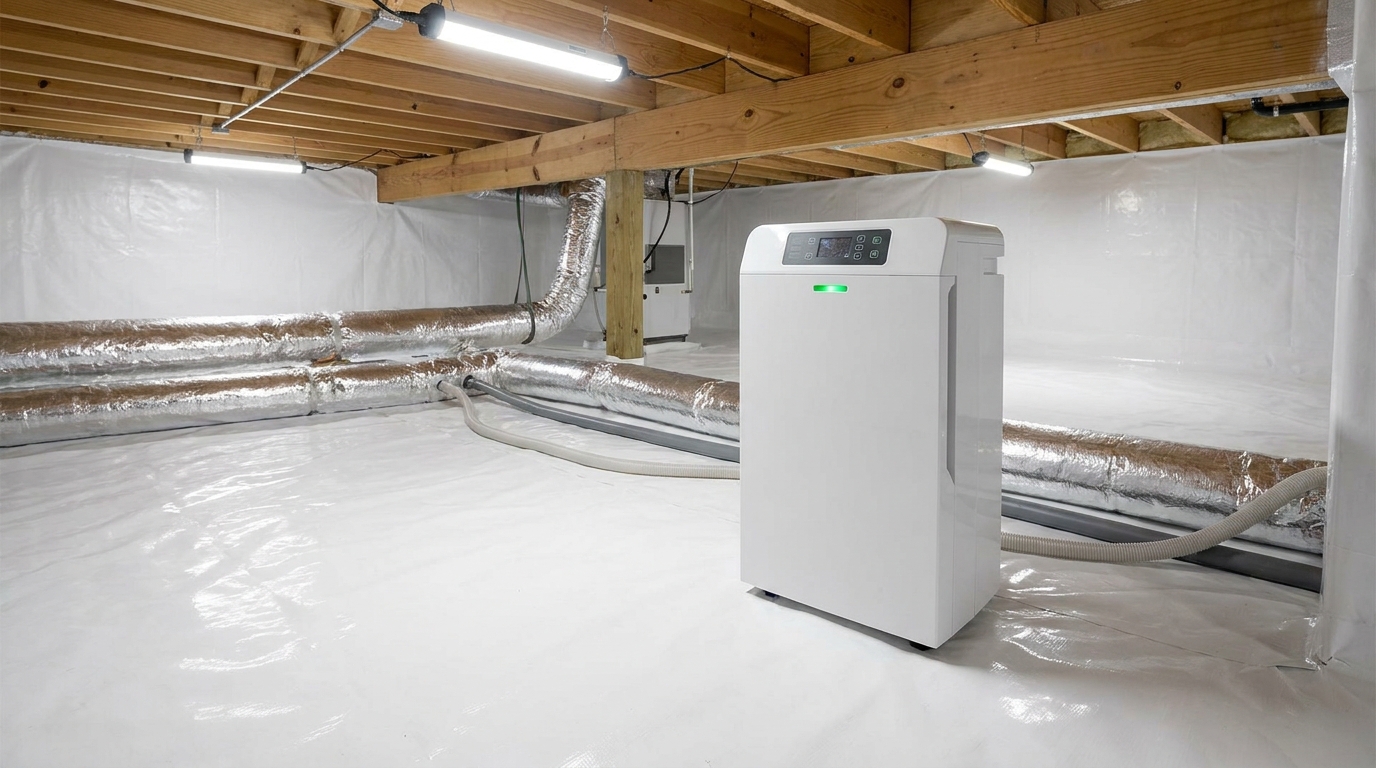
- Place it centrally. Position the dehumidifier toward the middle of the crawl space so it can circulate and treat the whole area rather than one corner.
- Keep intake and exhaust clear. Do not shove it tight against a wall or block the airflow with stored items or insulation.
- Drain it continuously. A crawl space dehumidifier should drain on its own, never to a bucket you have to empty. Use gravity drainage to a floor drain or sump if the slope allows, or a built-in condensate pump to push water up and out to a suitable discharge point.
- Protect against leaks. Route the condensate line so a clog or failure drains to the sump or outside, not onto the vapor barrier.
- Pair it with a vapor barrier. A dehumidifier works far better over a sealed floor and walls, because most crawl space moisture rises from bare soil.
Dehumidifier vs ventilation vs encapsulation
These three approaches are often framed as competing, but they solve the problem in different ways.
- Ventilation means open foundation vents that let outdoor air flow through. In dry climates this can help, but in humid regions it often makes things worse by inviting wet summer air into a cool crawl space, where it condenses. Modern building practice has largely moved away from passive venting in humid areas.
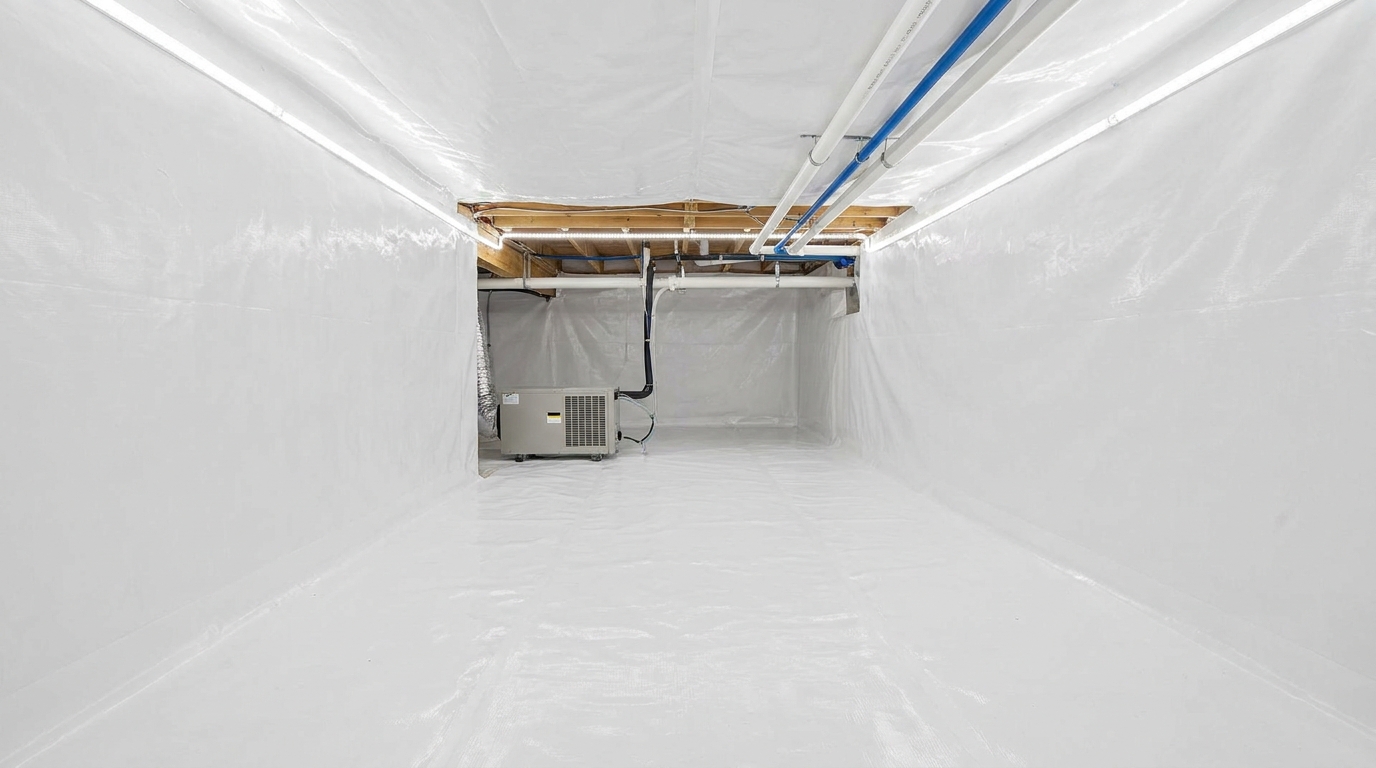
- Encapsulation seals the crawl space with a heavy vapor barrier across the floor and up the walls, closes the vents, and turns the space into a conditioned, isolated zone. It is the most thorough and most expensive option and it addresses the root cause, which is moisture entering from soil and outside air.
- A dehumidifier actively removes moisture from the air. On its own in a vented space it is an uphill battle, but inside a sealed or encapsulated crawl space it is the piece that keeps humidity reliably in the safe range.
The honest takeaway is that encapsulation plus a right-sized dehumidifier is the gold-standard combination for a humid climate. A dehumidifier alone can still help a reasonably tight crawl space, while open ventilation is increasingly the approach to avoid where summers are humid. If you are unsure which your home needs, start by measuring the humidity and identifying where the moisture is coming from. A simple, low-cost plan is to add a vapor barrier and a right-sized dehumidifier first, see whether that brings humidity into the safe range, and move up to full encapsulation only if the readings tell you it is warranted. That way you spend money in proportion to the actual problem rather than paying for the most expensive fix by default.
Frequently asked questions
Do I need a dehumidifier in my crawl space?
You likely do if the relative humidity consistently sits above about 60 percent, or you see mold, condensation or a musty smell. A dehumidifier is the right tool for airborne moisture, but active leaks or flooding must be fixed first.
What size dehumidifier do I need for my crawl space?
For a typical sealed crawl space, a 70 pint per day unit covers many homes up to about 1,500 square feet, with 90 to 120 pints for larger or very wet spaces. Size up if the space is damp, has a dirt floor, or is in a humid climate.
How much does a crawl space dehumidifier cost?
As an estimate, the unit typically runs $800 to $2,000, with professional installation often adding $300 to $1,000. Supplied and installed, many projects land around $1,500 to $3,500, though prices vary by region and brand.
How much does it cost to run a crawl space dehumidifier?
As a rough estimate, expect around $10 to $45 a month in humid months, less in dry weather. A sealed crawl space, an Energy Star model and a sensible humidistat setting all lower the running cost.
Is a dehumidifier or encapsulation better for a crawl space?
They work best together. Encapsulation seals out soil and outdoor moisture, and a right-sized dehumidifier keeps the remaining air in the safe range. In humid climates this combination outperforms open ventilation, which can make moisture worse.
Not sure if a dehumidifier alone is enough?
Match with a vetted local crawl space pro for an honest moisture assessment and a right-sized plan, free.
Get a free quoteSizing guidance and cost ranges are typical U.S. estimates compiled by SealedCrawl for general guidance and vary by region, climate, crawl space condition and local electricity rates. Always get a written on-site assessment.