Signs You Need Crawl Space Repair, and What Waterproofing Really Costs
Most homeowners never climb under their house, so a crawl space problem can grow for years before anyone notices. The good news is that the warning signs rarely stay hidden down there. They show up as smells, soft floors, higher energy bills, and comfort problems in the rooms you live in every day. This guide walks through the real signs you need crawl space repair, explains what crawl space waterproofing actually involves, what it costs in 2026, and how to get an honest diagnosis before you spend a dollar.
The signs you need crawl space repair
You do not have to go underneath the house to spot trouble. Because air and moisture move up from the crawl space into your living area, most warning signs appear where you can see them. Use the checklist below to gauge whether it is time for a professional look.
| What you notice | What it usually points to | Urgency |
|---|---|---|
| Musty or earthy smell indoors | Moisture or mold under the house | Soon |
| Sagging, bouncy, or sloping floors | Failing support or wood rot | High |
| Standing water or damp soil below | Active water intrusion | High |
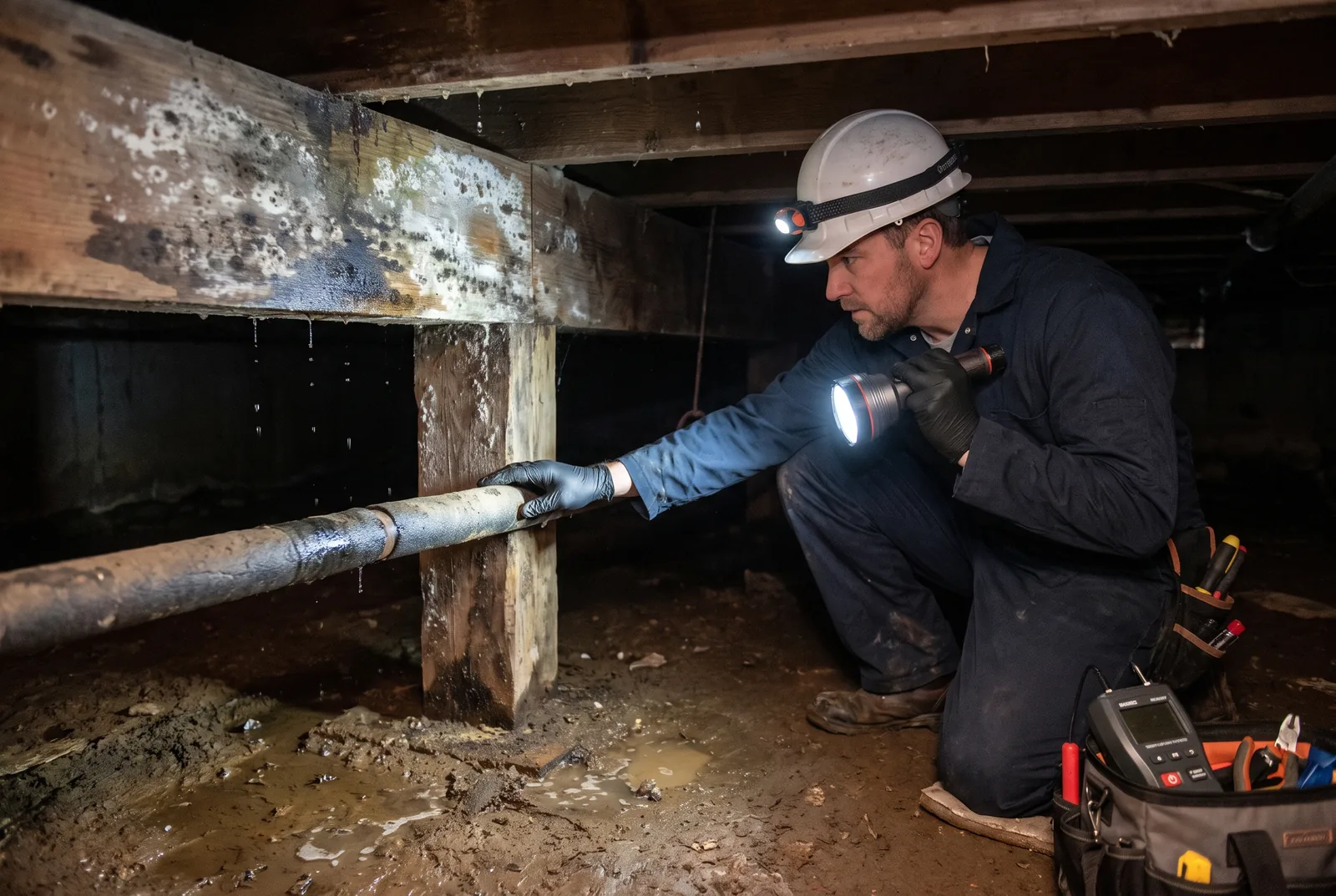
| Mold or white growth on joists | Chronic humidity | Soon |
| Rising heating and cooling bills | Wet or missing insulation, open vents | Moderate |
| Cupping or buckling hardwood floors | Humidity rising from below | Moderate |
| Condensation on windows or ducts | Excess crawl space humidity | Moderate |
| More pests or rodents than usual | Moisture and open access points | Moderate |
A single sign is often harmless on its own. The pattern to watch for is several appearing together, which usually means moisture has been working on the structure for a while. If you see standing water specifically, our guide on what to do about water in a crawl space covers the first steps.
What crawl space waterproofing actually means
Waterproofing is a broad term, and that is partly why quotes vary so much. It does not describe one product. It describes a strategy for keeping water and moisture out of the crawl space, and the right strategy depends on where your moisture comes from. The main building blocks are:
- Vapor barrier. Heavy plastic sheeting laid over the dirt floor to stop ground moisture from evaporating up into the space. It is the foundation of nearly every moisture plan. See our vapor barrier guide for the details.
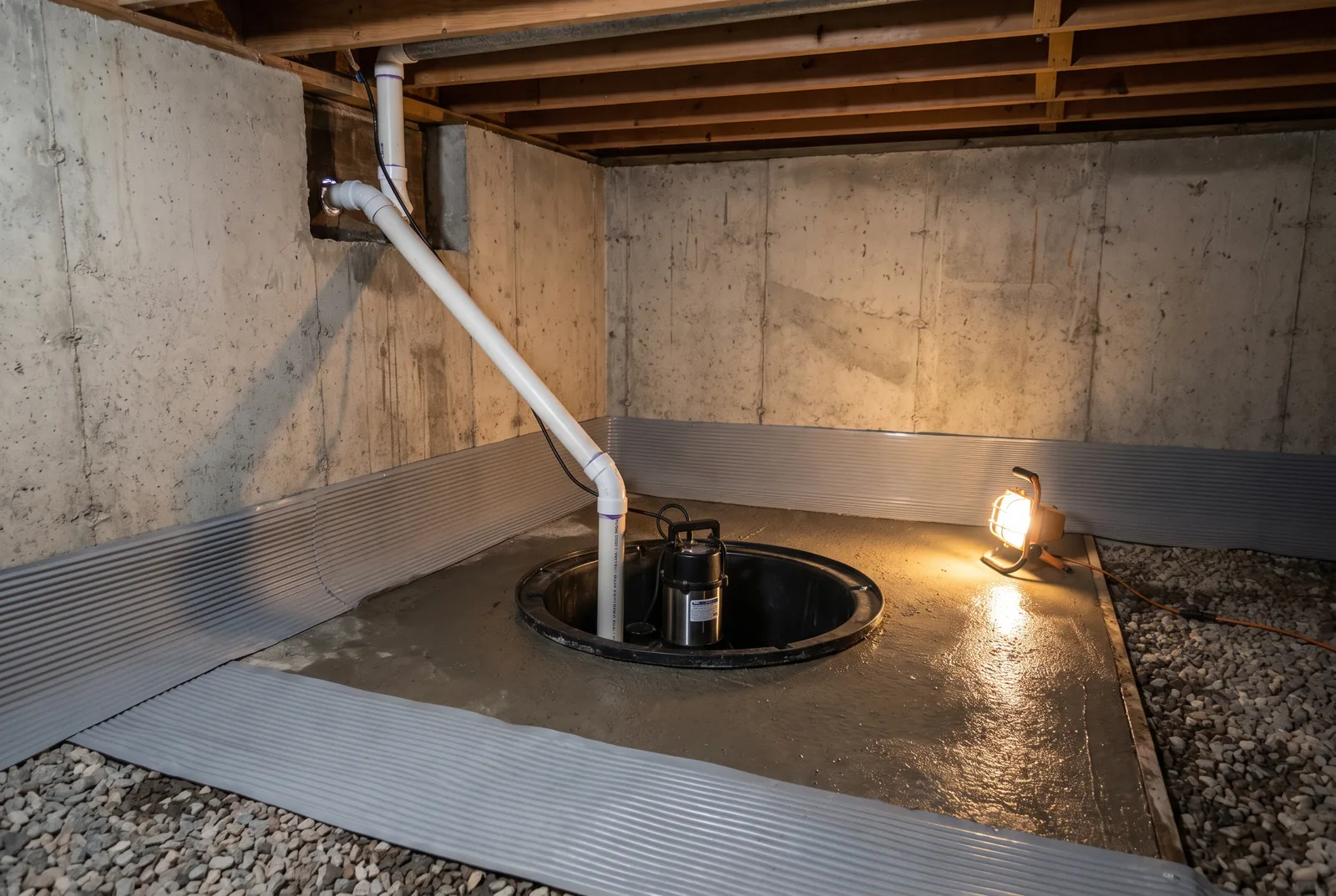
- Interior drainage. A channel system that collects water reaching the floor and routes it to a sump pump.
- Sump pump. Removes collected water and pushes it away from the foundation.
- Dehumidifier. Controls the humidity the barrier and drainage do not catch.
- Encapsulation. The most complete approach, sealing the entire floor and walls with a thick liner and closing the vents.
A good contractor assembles only the pieces your home needs. A damp space with no standing water may need nothing more than a sealed barrier and a dehumidifier, while a space that floods needs drainage and a pump as well.
Crawl space waterproofing cost in 2026
Because waterproofing ranges from a plastic sheet to a sealed, pumped, dehumidified system, the price range is wide. The table below shows typical U.S. figures to help you plan. Treat them as starting points, not quotes.
| Fix | Typical cost | Best for |
|---|---|---|
| Vapor barrier (replace) | $1,500 - $4,000 | Ground moisture, humidity |
| Interior drainage + sump pump | $1,500 - $5,000 | Active water intrusion |
| Mold remediation | $1,000 - $6,000 | Mold on joists and subfloor |
| Full waterproofing / encapsulation | $5,000 - $15,000+ | Sealing the whole space long term |
Where your project lands depends on the size and height of the space, how bad the moisture is, and how hard the crawl space is to access. For a deeper breakdown of a full seal, see our encapsulation cost guide, and for repairs beyond moisture, our crawl space repair cost guide. You can also estimate your own job with the cost calculator.
How urgent is it?
Not every sign demands an emergency call, but some should not wait. Think in three tiers. Standing water, sagging floors, and visible rot are high urgency, because they involve the structure or active water that compounds daily. Musty smells and mold are a close second, since they signal moisture that is already affecting your air. Rising energy bills, condensation, and minor humidity are worth addressing but give you time to plan and compare quotes.
The reason to act on the serious signs quickly is simple math. Moisture that rots a joist or warps a floor turns a moderate waterproofing job into a structural repair, and structural repair is where crawl space costs climb fastest. Catching the water early is almost always cheaper than fixing what the water ruins.
What causes crawl space moisture
Understanding the source helps you judge whether a quote makes sense. Crawl space moisture usually comes from one of a handful of places:
- Ground evaporation. Bare dirt floors release moisture into the air constantly, which is why a vapor barrier is nearly always part of the fix.
- Surface water. Poor grading, short downspouts, or clogged gutters send rain toward the foundation, where it seeps in.
- Groundwater. A high water table pushes moisture up through the soil, especially after heavy rain.
- Humid outside air. Open vents let warm, humid air in, where it condenses on cooler surfaces under the house.
- Plumbing leaks. A slow leak in a pipe running through the crawl space can keep the space wet year round.
A contractor who identifies which of these is driving your problem is doing the job right. A quote that names a price without naming a cause is a guess.
How to get an honest diagnosis
Crawl space work is hidden, so you are relying on the contractor to tell you the truth about what is down there. Protect yourself with a few simple habits.
- Insist on a real inspection. A trustworthy pro goes under the house, identifies the moisture source, and shows you photos before quoting.
- Ask for the least invasive fix that solves the source. If every home gets sold the same expensive encapsulation, get a second opinion.
- Get two or three written quotes and compare what each includes, not just the totals.
- Confirm licensing, insurance, and a written warranty that transfers to a future owner.
- Separate the symptom from the source. Removing mold or adding a pump without fixing the water guarantees the problem returns.
The signs that bring you here are real, and ignoring them only raises the eventual bill. But the answer is not always the biggest system on the estimate. The right repair is the one that solves your actual moisture source, done once and backed by a warranty.
Can you handle any of it yourself?
Some crawl space tasks are reasonable for a confident homeowner, and some are not. The outside causes of moisture, in particular, are often a weekend fix. Extending downspouts away from the foundation, clearing clogged gutters, and improving the grade so soil slopes away from the house all reduce the water reaching your crawl space and cost very little. Laying a basic vapor barrier over a dry dirt floor is also within reach for many people, though a DIY barrier is usually thinner and not sealed as tightly as a professional installation, so it may not last as long.
The work that touches water removal, the structure, or your air quality is a different matter. Interior drainage, sump pump installation, structural jacking, and mold remediation reward experience and the right equipment, and getting them wrong can spread mold through the house or make settlement worse. Disturbing mold without containment, for instance, can push spores into your living space. A good rule of thumb is that if the repair involves the water source, the framing, or mold, the cost of getting it wrong usually dwarfs the labor you would save, so it belongs with a licensed pro who warranties the result.
Frequently asked questions
What are the signs you need crawl space repair?
The most common signs are a musty or earthy smell indoors, sagging or bouncy floors, standing water or damp soil below, mold on the joists, rising energy bills, and cupping hardwood floors. One sign may be minor, but several together usually mean moisture has been affecting the structure and warrant a professional inspection.
What is crawl space waterproofing?
Crawl space waterproofing is a strategy, not a single product, for keeping water and moisture out of the space. Depending on the source, it can combine a vapor barrier, interior drainage, a sump pump, a dehumidifier, and in the most complete cases full encapsulation that seals the floor and walls.
How much does crawl space waterproofing cost?
A full waterproofing or encapsulation system typically runs $5,000 to $15,000 or more, while targeted fixes cost less, such as $1,500 to $4,000 for a vapor barrier and $1,500 to $5,000 for interior drainage with a sump pump. These are typical U.S. ranges that vary by size, severity and access.
Is crawl space encapsulation the same as waterproofing?
Encapsulation is one type of waterproofing, the most complete, where the entire floor and walls are sealed with a thick liner and the vents are closed. Lighter waterproofing can mean just a vapor barrier and a dehumidifier. The right choice depends on how much water and humidity your space has.
Can I ignore a damp crawl space?
It is risky. Persistent moisture leads to mold, wood rot, and sagging floors, and a minor waterproofing job that is ignored can turn into a far more expensive structural repair. Addressing the moisture early is almost always cheaper than fixing the damage it causes.
Spotting the signs but not sure how serious it is?
Match with a vetted local crawl space pro for an honest inspection and a clear, written quote, free.
Get a free quoteCost ranges are typical U.S. figures compiled by SealedCrawl for general guidance and vary by region, crawl space condition and contractor. Always get written on-site quotes.