Water in the Crawl Space: What to Do and How to Fix It
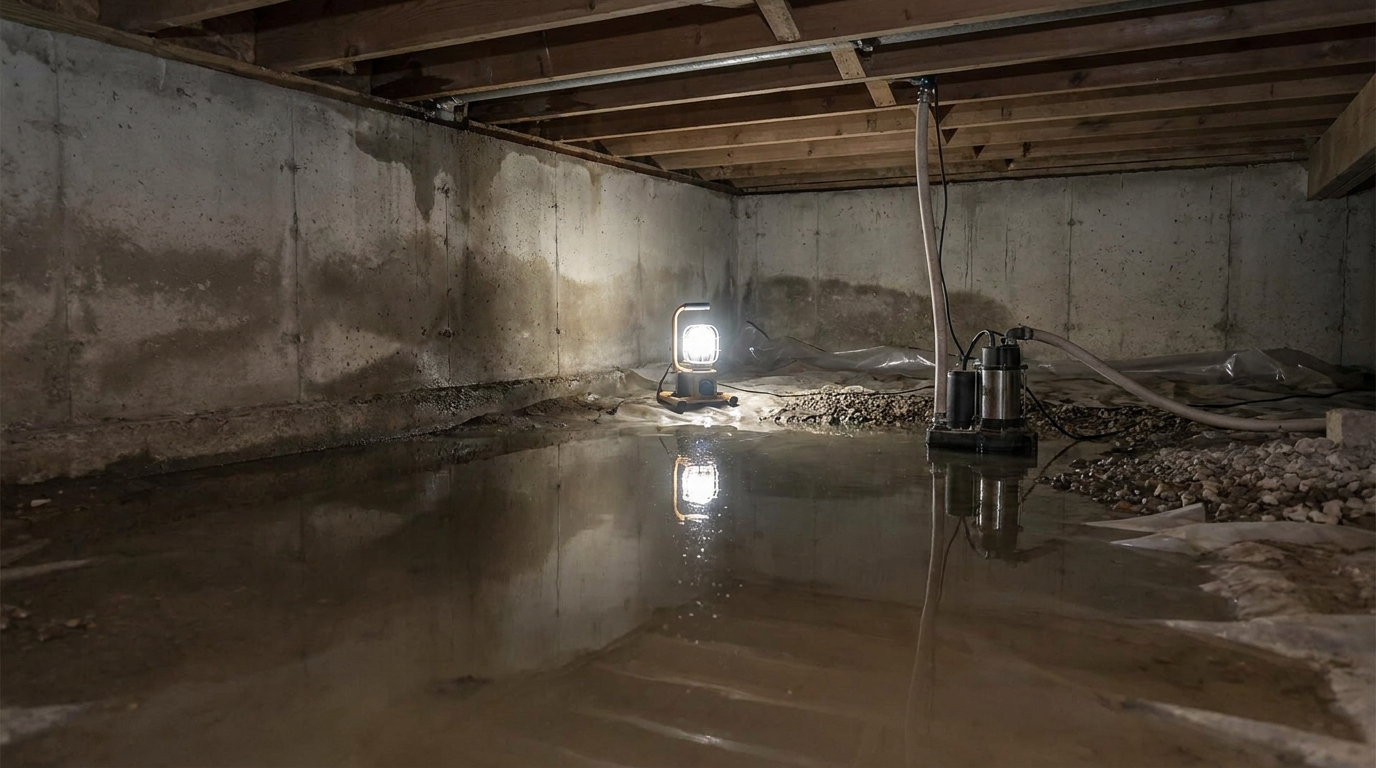
Opening the crawl space hatch and finding standing water, damp soil or a musty smell is alarming, but it is also common and almost always fixable. The key is to figure out where the water is coming from, take a few sensible steps right away, and then choose a permanent fix that matches the actual cause rather than the first repair a salesperson suggests. This guide walks through why water gets in, what to do immediately, and what the lasting solutions typically cost.
Why water gets into a crawl space
Water almost never appears for no reason. Identifying the source is the single most important step, because the right fix depends entirely on it. The usual culprits are:
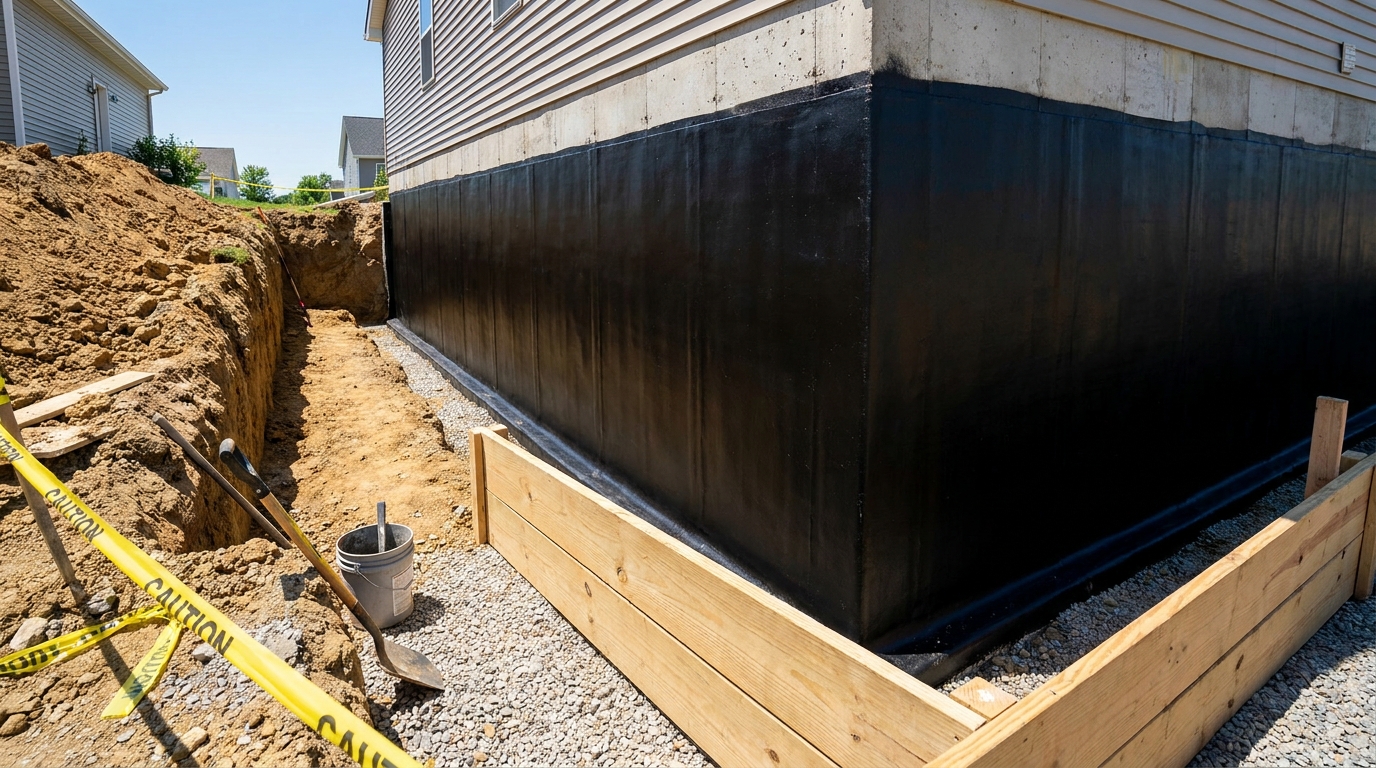
- Poor grading. If the soil around your foundation slopes toward the house instead of away from it, rain runs straight down to the footing and into the crawl space.
- Gutter and downspout problems. Clogged, broken or short downspouts dump roof water right next to the foundation, which is one of the most common and cheapest-to-fix causes.
- A high or seasonal water table. In some areas groundwater rises after heavy rain or snowmelt and pushes up through the soil floor. This is harder to stop and usually needs a drainage system and pump.
- Plumbing leaks. A leaking supply line, drain or water heater above or inside the crawl space can pool water that has nothing to do with rain.
- Condensation. Warm, humid outside air entering a cool crawl space condenses on cold surfaces and ducts. This looks like a water problem but is really a humidity problem, and the fix is different.
A quick way to narrow it down: if the water shows up during or right after rain, suspect grading, gutters or the water table. If it appears in dry weather, suspect plumbing or condensation.
How to find the source
Spending twenty minutes diagnosing the problem can save you thousands on the wrong repair. A few simple checks usually point to the cause:
- Watch during rain. If you can safely look into the crawl space while it is raining, you may see exactly where water enters, whether it is seeping through a wall, rising from the floor or dripping from a pipe.
- Inspect the plumbing. Trace supply lines, drains and the water heater for drips, corrosion or mineral staining. Water pooling under a specific fixture points to a leak rather than rain.
- Feel the surfaces. Beads of water on cold pipes, ducts and the underside of the floor usually mean condensation, not intrusion.
- Walk the perimeter outside. Look for soil sloping toward the house, downspouts ending right at the foundation, and low spots where puddles collect after a storm.
If the cause still is not obvious, a professional can perform a moisture inspection and sometimes a dye or pressure test to isolate a leak.
What to do immediately
Before you commit to any permanent repair, take these steps to limit damage:
- Stop active leaks. If a pipe or water heater is leaking, shut off the water supply to it or to the house.
- Protect yourself. Do not enter standing water near electrical wiring, junction boxes or a powered sump. If in doubt, cut power to the crawl space circuits first or stay out.
- Remove the water. Use a wet/dry vacuum for small amounts or a portable pump for larger pooling. Move stored items off the wet floor.
- Dry it out. Run a dehumidifier and fans to bring humidity down and slow mold growth. The faster it dries, the less damage to wood framing and insulation.
- Check the easy external causes. Clear your gutters, make sure downspouts carry water several feet away from the house, and look for obvious low spots where soil slopes toward the foundation.
- Document everything. Photograph the water and any damage in case you later file an insurance claim or get quotes.
Permanent fixes and typical costs
Once the space is dry, address the root cause. Work from the outside in and from cheapest to most involved, since solving the water source outside often reduces or eliminates the need for expensive interior work.
| Fix | Typical cost (estimate) | Best for |
|---|---|---|
| Gutter cleaning / downspout extensions | $100 - $600 | Roof water pooling at the foundation |
| Regrading soil around the home | $1,000 - $3,000 | Ground sloping toward the house |
| Vapor barrier (plastic over soil) | $1,000 - $3,000 | Damp soil, condensation, humidity |
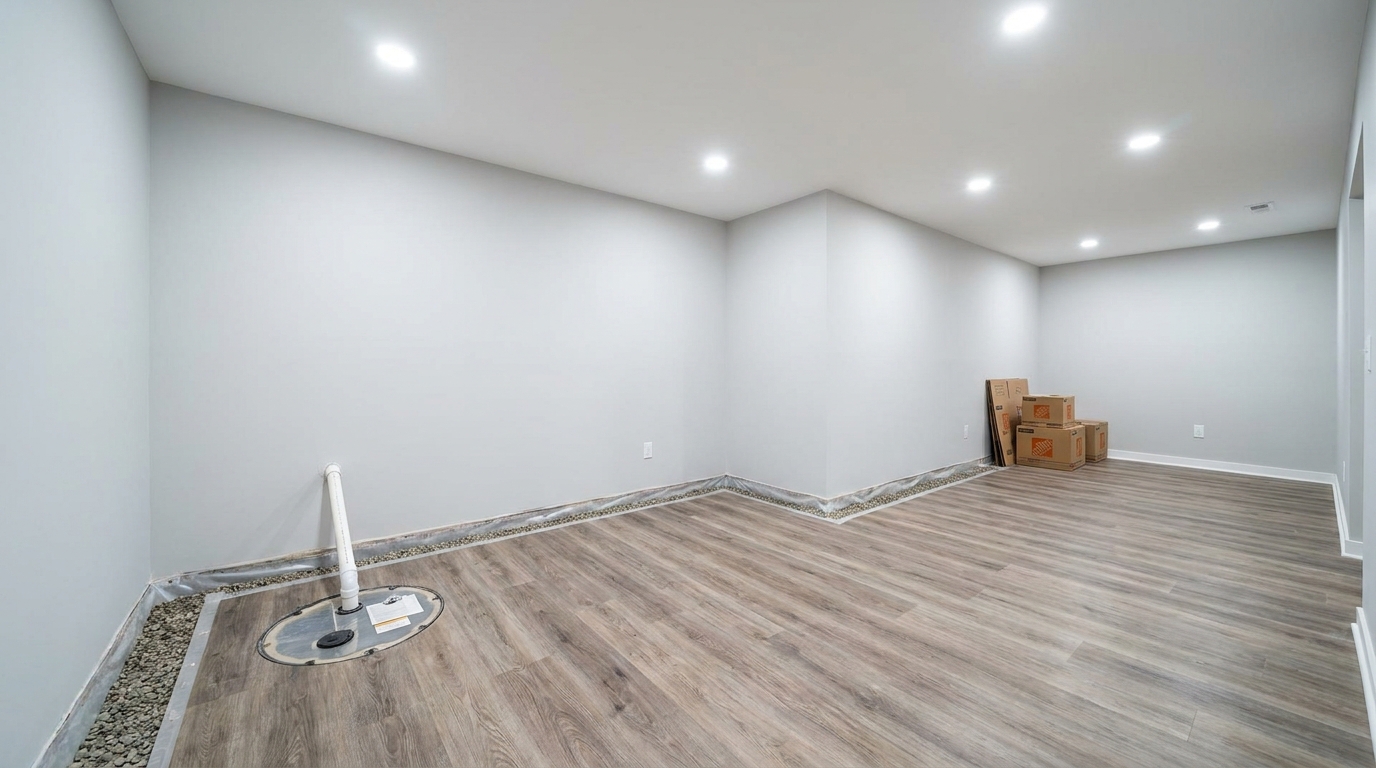
| Interior drainage + sump pump | $1,500 - $6,000 | Recurring groundwater intrusion |
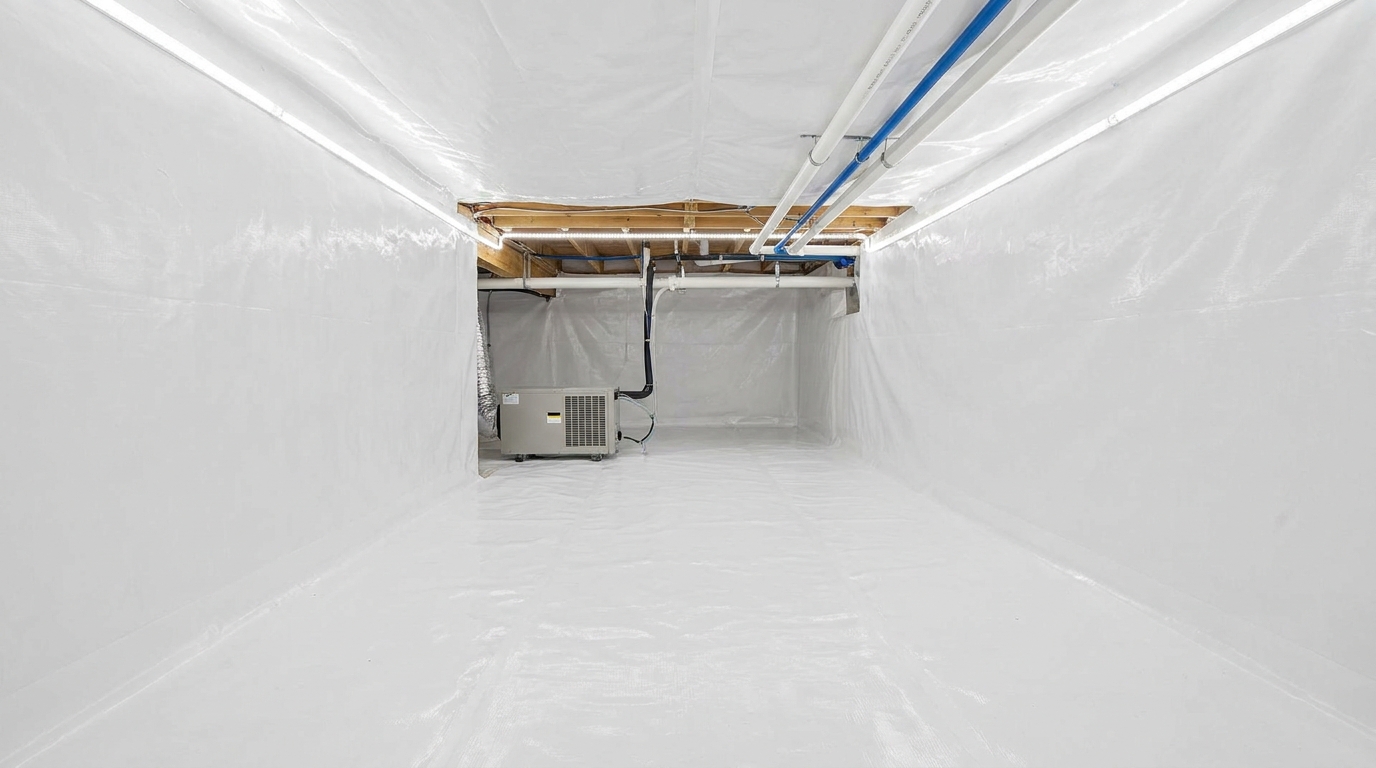
| Full crawl space encapsulation | $5,000 - $15,000 | Chronic moisture, long-term dryness |
Figures above are typical U.S. estimates and vary widely by region, crawl space size, access and contractor.
Costs climb when the crawl space is tight or hard to access, when framing or insulation already has water damage that must be replaced, and when more than one fix is combined, which is common. A home with a high water table, for example, often needs grading corrected outside and a drain-and-pump system inside, so the final bill reflects both.
Choosing the right fix
- Start with water management outside. Clean gutters, extend downspouts and fix grading first. These are the cheapest steps and solve a surprising share of crawl space water problems.
- Add a vapor barrier for moisture and condensation. A sheet of thick plastic laid over the soil blocks ground moisture from evaporating into the space. It is one of the most cost-effective upgrades for a damp but not flooding crawl space.
- Install drainage and a sump pump for groundwater. If water physically rises into the space, a perimeter drain channels it to a pit where a sump pump sends it outside. A battery backup is worth considering so the pump still works during a power outage.
- Consider encapsulation for a permanent dry space. Encapsulation seals the floor and walls with a heavy liner, usually paired with a dehumidifier and drainage. It is the most thorough and most expensive option, best for homes with chronic moisture or anyone who wants to use the space for storage.
Why bother getting it right? A chronically wet crawl space does not stay contained down there. Moisture rises into the floors and walls above, feeds mold and wood rot, attracts pests, and can drive up energy bills because damp air is harder to heat and cool. Roughly half of the air you breathe on the first floor can originate in the crawl space, so fixing the water is as much about the living space above as the dirt below.
How to prevent it coming back
- Clean gutters at least twice a year and after major storms so roof water never overflows at the foundation.
- Keep downspouts discharging several feet from the house, and check that extensions have not been knocked loose.
- Maintain soil that slopes away from the foundation, and refill any settled low spots.
- Test your sump pump periodically by pouring water into the pit, and replace it before it fails if it is near the end of its life.
- Check the crawl space a few times a year, especially after heavy rain, so a small problem is caught before it becomes a flood.
When to call a professional
Plenty of homeowners can clean gutters, extend a downspout or lay a basic vapor barrier. But some situations call for a pro, and trying to save money on them usually costs more later. Call a professional if you see:
- Standing water that returns after you remove it, or water every time it rains.
- Sagging floors, cracked foundation walls, or wood framing that is soft, discolored or crumbling.
- Visible mold, a persistent musty odor, or health symptoms you suspect are tied to the home.
- Any sewage, which is a health hazard and should never be handled without proper equipment.
- Electrical components sitting in or near water.
A reputable crawl space or foundation contractor should diagnose the water source before quoting a fix, offer the least invasive solution that actually solves it, and put a workmanship warranty in writing. If a company jumps straight to a five-figure encapsulation without checking your gutters and grading, get a second opinion.
Frequently asked questions
Why is there water in my crawl space?
The most common causes are poor drainage around the home (bad grading or clogged gutters), a high water table pushing groundwater up, a plumbing or water heater leak, and condensation from humid air. If water appears during rain it is usually drainage or groundwater; in dry weather it is usually plumbing or condensation.
What should I do first when I find water in my crawl space?
Stop any active leak by shutting off the water, stay clear of standing water near electrical wiring, remove the water with a wet/dry vacuum or pump, and run a dehumidifier and fans to dry the space. Then clear gutters and check that downspouts and grading carry water away from the house.
How much does it cost to fix water in a crawl space?
It depends on the cause. Gutter and downspout fixes run roughly $100 to $600, regrading $1,000 to $3,000, a vapor barrier $1,000 to $3,000, interior drainage with a sump pump $1,500 to $6,000, and full encapsulation $5,000 to $15,000. These are typical U.S. estimates that vary by region and contractor.
Do I need a sump pump for my crawl space?
A sump pump makes sense when groundwater physically rises into the space, especially with a high water table or recurring flooding. If your water comes from gutters, grading or condensation, fixing those or adding a vapor barrier may solve the problem without a pump.
Is water in a crawl space dangerous?
It can be. Standing water promotes mold, wood rot and pests, can damage structural framing over time, and poses an electrical shock risk near wiring. Sewage water is a direct health hazard. Persistent or returning water, sagging floors or visible mold should be assessed by a professional.
Not sure where the water is coming from?
Match with a vetted local crawl space pro for an honest diagnosis and quote, free.
Get a free quoteCost ranges are typical U.S. estimates compiled by SealedCrawl for general guidance and vary by region, crawl space size, water source and contractor. Always get a written on-site assessment.