Crawl Space Sump Pumps: Cost, Installation and When You Need One
Water pooling under your house is never good news, and a sump pump is one of the most common fixes a contractor will put in front of you. But a crawl space sump pump is not a universal answer, and the price you are quoted can swing from under a thousand dollars to several thousand depending on your floor, your access, and what the pump is actually tied into. This guide explains what a crawl space sump pump does, what it really costs in 2026, when you genuinely need one, and how to make sure you are paying a fair price rather than the biggest number on the estimate.
What a crawl space sump pump actually does
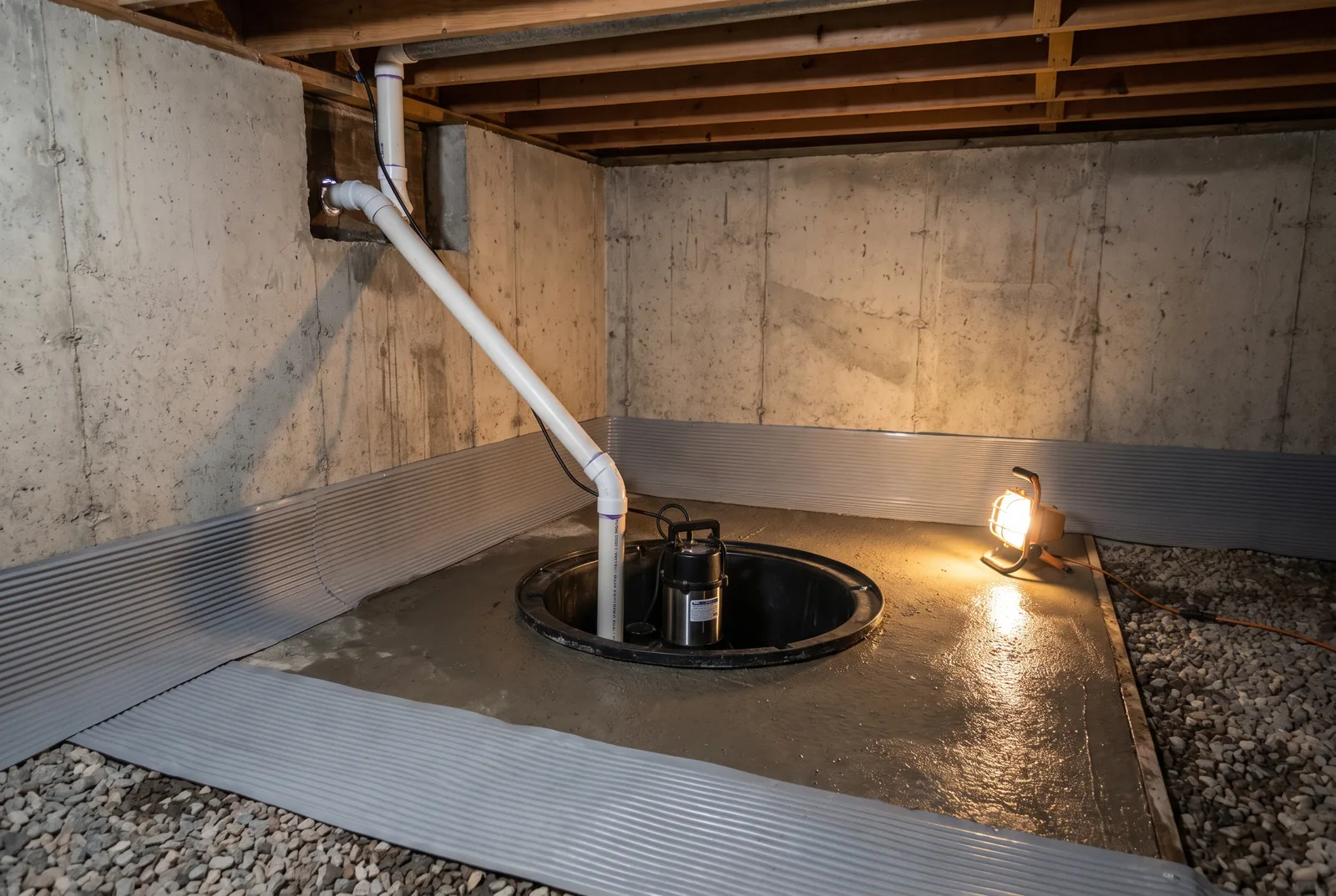
A sump pump is a simple machine with one job: collect water that reaches a low point and push it away from your home before it causes damage. In a crawl space, the pump sits inside a pit, called a sump basin, dug into the lowest part of the floor. When water drains into that basin and rises to a set level, a float switch turns the pump on and water is pushed out through a discharge pipe to a spot well away from the foundation.
On its own, a pump does not stop water from getting in. It manages water that is already there. That distinction matters, because a pump dropped into a chronically wet crawl space without addressing where the water comes from will run constantly, wear out early, and leave you with the same damp problem. A well-designed system collects water from the right places and gives the pump a clear path out.
Crawl space sump pump cost in 2026
The headline price for a sump pump installed in a crawl space is usually $1,000 to $2,500, but it helps to see where that money goes. The pump is the cheapest part. Labor, the pit, and the discharge line are what move the number up or down.
| Cost component | Typical range | Notes |
|---|---|---|
| Sump pump (unit) | $100 - $400 | Submersible pumps cost more than pedestal units |
| Labor / installation | $500 - $1,700 | Crawl space access makes this higher than a basement |
| Sump pit / basin | $100 - $500 | Digging into dirt is cheaper than cutting concrete |
| Discharge line routing | $100 - $600 | Longer or buried runs cost more |
| Battery backup (optional) | $300 - $1,000 | Keeps the pump running during outages |
| Pump + interior drainage combined | $1,500 - $5,000 | The common pairing for active water |
Crawl space jobs tend to run a little higher than basement jobs for one plain reason: the space is harder to work in. A crew that has to crawl on a dirt floor, work around low clearance, and route a discharge line out of an awkward spot will charge more than the same install in a stand-up basement. If a drainage channel has to be dug around the perimeter to feed the pump, expect roughly $15 to $30 per linear foot on top of the pump itself. You can sanity-check your own numbers with our cost calculator before you compare quotes.
Do you actually need a sump pump?
Not every damp crawl space needs a pump. A sump pump earns its keep when water physically collects in the space, not merely when the air feels humid. Here are the situations where one is usually the right call:
- Standing water after rain. If you find puddles or a wet floor every time it storms, you have liquid water entering and a pump gives it somewhere to go.
- A high water table. Homes in low-lying areas or near the water table see groundwater push up through the soil, and a pump keeps it from sitting under the house.
- Persistent dampness that a vapor barrier alone has not solved. When moisture control is in place and the floor still gets wet, active water removal is the missing piece.
- A finished or encapsulated crawl space where any water intrusion would damage the liner, insulation, or stored belongings.
If your problem is humidity and condensation rather than liquid water, a pump is the wrong tool. In that case a sealed vapor barrier and a crawl space dehumidifier usually do far more than a pump ever would. When you are not sure which you are dealing with, our guide on water in a crawl space and what to do walks through how to tell them apart.
Why a pump alone is rarely the whole fix
The most common mistake homeowners make is treating the pump as the entire solution. In practice a pump is one component of a moisture system, and the other pieces are what make it last. A complete setup usually includes interior drainage to channel water to the basin, a sealed vapor barrier to stop ground moisture, and often a dehumidifier to control the air. Skipping the drainage and expecting a lone pump to keep a wet crawl space dry is how pumps burn out within a couple of years.
This is also why the combined job, pump plus interior drainage, is the figure most contractors quote for an active water problem. At $1,500 to $5,000 it costs more than a pump alone, but it solves the problem instead of masking it. For the full long-term approach, many homeowners eventually pair drainage and a pump with crawl space encapsulation, which seals the space so the pump has far less work to do.
Types of sump pumps and backups
You do not need to be a plumber to make a smart choice, but knowing the basic options helps you read a quote.
- Submersible pumps sit inside the basin, underwater. They are quieter, handle solids better, and are the usual pick for crawl spaces. They cost a little more.
- Pedestal pumps keep the motor above the water on a shaft. They are cheaper and easier to service but louder and less suited to tight crawl spaces.
- Battery backup pumps kick in when the power fails, which matters because storms that flood your crawl space are the same storms that knock out electricity. A backup adds cost but prevents the exact flood the system is meant to stop.
- Water-powered backups run off municipal water pressure and need no battery, though they are not an option for homes on a well.
For most crawl spaces, a quality submersible pump with a battery backup is the combination that balances cost against reliability.
How to vet the quote and avoid overpaying
Because so much of the price is labor and site conditions, who you hire matters as much as the pump they install. A few steps keep you from overpaying.
- Ask what the pump is tied into. A fair quote explains the drainage feeding the basin, not just the pump model. A pump with no collection plan is a short-term patch.
- Get the discharge location in writing. Water must exit well away from the foundation, or it simply circles back. Confirm where the line ends.
- Compare two or three written quotes. Pricing in this trade varies more by company than by scope, so spread matters.
- Confirm the warranty on both the pump and the labor, and ask whether it transfers to a future owner.
- Be wary of a single giant number. If a company only sells a full encapsulation when you asked about a pump, get a second opinion on whether the simpler fix would hold.
A good contractor welcomes these questions. The goal is straightforward: pay for a pump that is correctly sized and correctly connected, so it quietly does its job for years instead of failing the first time you really need it.
Frequently asked questions
How much does a crawl space sump pump cost?
A crawl space sump pump installed typically runs $1,000 to $2,500. The pump unit is only $100 to $400, with the rest going to labor, the sump pit, and discharge routing. Paired with an interior drainage system, the combined job usually runs $1,500 to $5,000. These are typical U.S. ranges that vary by region and conditions.
Do I need a sump pump in my crawl space?
You need one when liquid water collects in the space, such as standing water after rain or groundwater from a high water table. If the problem is humid air rather than pooling water, a sealed vapor barrier and a dehumidifier usually do more than a pump would.
How long does a crawl space sump pump last?
A quality sump pump typically lasts about 7 to 10 years, though a pump forced to run constantly in a crawl space with no drainage support wears out sooner. Proper drainage and a vapor barrier reduce how hard the pump works and extend its life.
Where does a crawl space sump pump drain to?
The discharge line should carry water well away from the foundation, often to a storm drain, a dry well, or a graded spot in the yard where it cannot flow back toward the house. A discharge that ends too close to the foundation simply recirculates the problem.
Can I install a crawl space sump pump myself?
A handy homeowner can install a basic pump, but digging the basin correctly, tying in drainage, and routing a proper discharge line in a tight crawl space is difficult and easy to get wrong. Because a failed pump can mean a flooded crawl space, most people hire a pro who warranties the work.
Not sure if a sump pump is the right fix?
Match with a vetted local crawl space pro and sanity-check your quote, free.
Get a free quoteCost ranges are typical U.S. figures compiled by SealedCrawl for general guidance and vary by region, crawl space condition and contractor. Always get written on-site quotes.